

Introduction
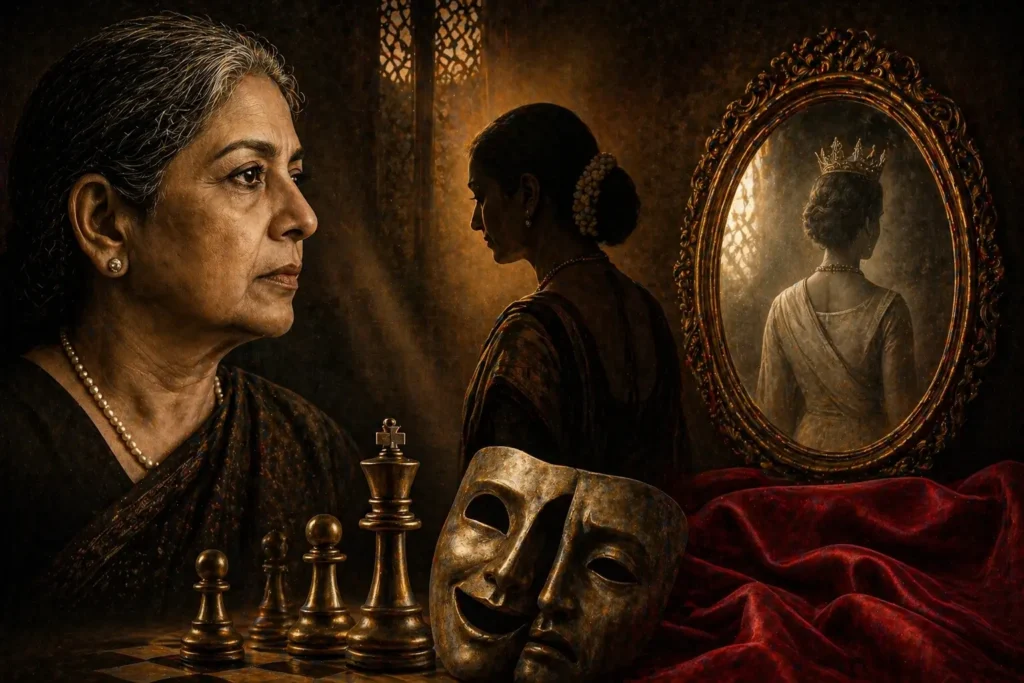
Sahitya Akademi Award winner Mahesh Dattani for his splendid work “Bravely Fought the Queen” exposes the hypocrisy of society and dwells upon the inferior position of women and those men who fall outside the sexual norm.
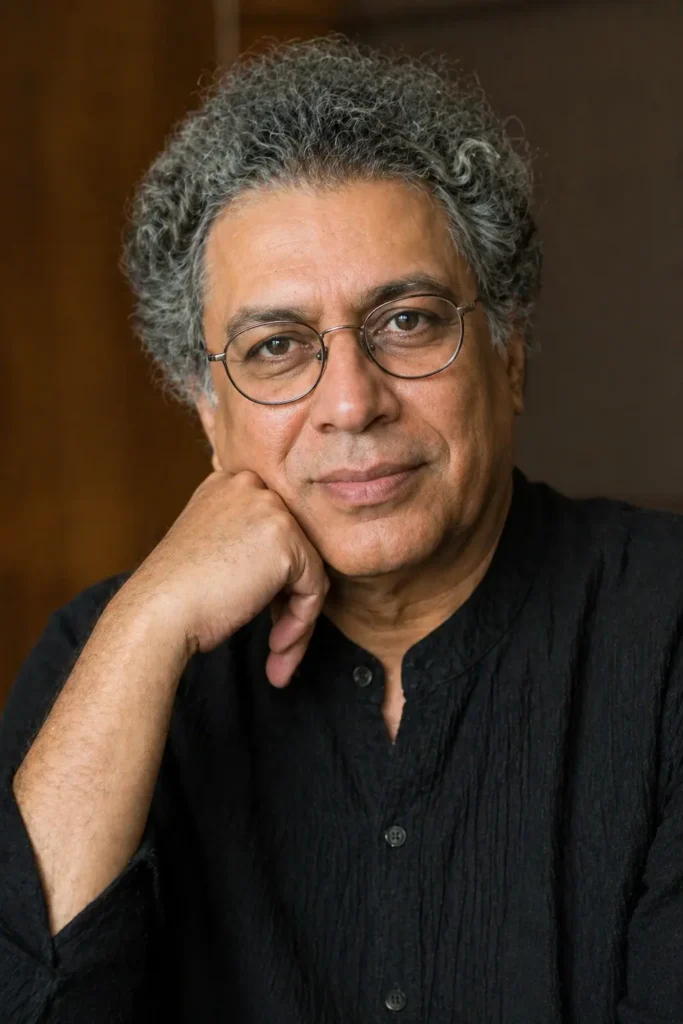
“To direct a play is a process of making the word flesh. When the words are Mahesh Dattani’s, the flesh is already contained within the words.”(Walling, 229).
This blog focuses on the offstage women characters involved in the play. Some of them do have a voice but no appearance while some do not even have a voice. They play a very significant role in the play and give a pang of realisation to both the onstage characters and the readers.
The onstage characters- the Trivedis, Lalita and Sreedhar are very relevant to the theme and demonstrate as Dattani’s critic Sanjukta Das says:
“Social issues such as marriage, violence against women, homosexuality and communal violence, are shown through the prism of the family.”(Das, 242).
But the offstage characters define a larger society outside the household and aim to expose a bigger section of the patriarchal system. John McRae has rightly regarded him as “the voice of India now” as his plays mostly deal with the problems of women all around the nation. The play depicts the emotional, financial and sexual complexities of Indian urban family. The women of Mahesh Dattani’s plays are exploited in a multiple ways. When it goes beyond endurance some do fight back but some ended up cursed as crippled for life or lost their life.
Women in Mahesh Dattani’s Text
Mahesh Dattani’s story and characters portray the struggles of women against the oppression of patriarchal Indian society. This play, having family as its background, showcases the emotional, financial and sexual conflicts of a modern, educated urban Indian family. Mahesh Dattani’s women, attempt to forcefully cross the margins drawn by patriarchal society, but at the end, succumb to the domination of patriarchy and waste away.
Daksha, the daughter of Jiten and Dolly Trivedi, is one of the most important offstage characters. Throughout the play we see many women being abused but Daksha was the only character who was exposed to her father’s brutality even before she was born, she was at no peace even in womb. Dolly was pregnant when Jiten beat her and as a result Daksha was born two months premature, deformed and mentally retarded. Dolly and Jiten both feels reluctant to talk about Daksha as pointed out by Alka:
ALKA: She must like you very much. She hardly ever mentions her daughter to anyone.
DOLLY: Stop it! (BFQ ACTI, 34).
and Dolly converses to self that
DOLLY(to herself): He doesn’t mention Daksha, but he mentions my tailoring.(BFQ ACTI, 10)
On the other hand Alka doesn’t seem to show much compassion towards Daksha when she comments:
ALKA: And Dolly? Dolly has been blessed because she has Daksha?(Laughs in an ugly way.)(BFQ ACT II, 64)
which could be because she is jealous of Dolly, as with Nitin’s homosexual nature she can never become a mother. Daksha goes to a special school in Ooty and learns dance as a part of her treatment. Surprisingly she is the only character whose mention makes Jiten feel guilty. On Dolly’s anguish at the plight of her handicapped child critic Sanjukta Das writes:
“But in imitating the uncoordinated movements of her spastic daughter Daksha, Dolly’s dance becomes a terrible weapon that goads Jiten towards his final act of self destruction.”(Das, 244)
Baa, Praful, and Jiten did injustice to Daksha. Their excessive love for Daksha results from their past guilt and hence Baa decides to sign the main family house to Daksha in her will.
Offstage female characters in Mahesh Dattani’s Bravely Fought the Queen:
The old beggar woman is also never shown on the stage but Alka and Dolly inform the audience through their conversation that she often comes to their houses. Without a single fault of the poor soul throughout the play, she is first kicked by Alka and finally driven over by Jiten. Not only was she called names by the Trivedi sisters but also thrown out of the compound often.
Dolly: That wretched woman is back. Where’s the watchman? She sneaks in all the time.(BFQ ACTI, 24)
The innocent old woman had no idea that she would be killed for peacefully sleeping outside in the rain under a tarpaulin. This old beggar woman and Baa are both of quite the same age but are shown to have quite contrasting lives. Baa who is taken great care of and is provided with all the comforts on Jiten’s order, the old beggar woman is killed by the same man’s car.
The siblings Dolly, Alka and Praful’s mother is another offstage woman who is also a victim of patriarchy and is being judged even after her death. Both the sisters bear the taunts of Baa mainly because of their mother’s second marriage with an already married man. She was deceived by her husband into marriage as she had no idea about his first one thus degrading her to his mistress.
DOLLY: My mother didn’t know about his first wife till later. She was deceived too!(BFQ ACTIII, 96)
Praful hides this truth from the Trivedis before getting the sisters married. Later when Baa gets to know the truth she scolds their mother as whore and also takes them to be whores. She induces her son Jiten to beat Dolly during her advanced stages of pregnancy and to throw Alka out of the house.
Dolly and Alka’s mother had to suffer twice firstly at the hands of such husband and then at the hands of the society. Baa, being a victim herself, even once does not think about the sorrow of such a woman who had to face such adultery of a husband. Dolly’s liking to Naina Devi’s (a queen who at times was also mistaken as a tawaif) thumris is probably because of her mother, who at some time wanted to be a singer but was also compressed by the societal norms.
The group of women who were the part of Sridhar’s survey are not only the offstage females who have got a voice but also who independently keep their views. They disagree the silly notions that women should be dolled up to attract men; neither do they believe that women are dependent on men for any of their needs. These women are sensible enough to regard the mentality of those like Jiten as offensive.
SRIDHAR: …but most of them used one word to describe it—offensive.(BFQ ACTII, 53)
They know that it is a waste of money to spend on such costly, fancy and uncomfortable night wears. This group of women represent how independent, confident and self-sufficient they are and put forward their believes as contrast to the male chauvinist Jiten who considers that a woman is just a commodity and an enjoyable thing. Sridhar seems the only person who considers these views of the women should be respected.
In this play we also hear about an unnamed prostitute who is neither given a face nor a body. All we know about her is that she was ordered to be brought by Jiten but was used by Sridhar too. We hear nothing about the feelings or the condition of this woman who is just objectified as a toyed by the men.
Shirley, the ReVaTee model, a self-made and open minded girl had supposedly refused to fulfil Jiten’s sexual desires and hence he was pissed at her and wanted to replace her. For all she did was being professional with her career. The girl was taken for granted and judged because of her choice of career. Jiten wanted her to strip at the launch and also made his nasty comment:
JITEN: She’s modelling undies. Who the hell will notice the face?(BFQ ACTII, 41)
which proves the misogynist mentality of Jiten. Jiten discloses his narrow mind that woman’s identity is subordinated to male desires.
Baa, the mother of the Trivedi brothers, was herself a victim of spousal abuse but failed to teach her son otherwise. Her anger and frustration is mis-directed towards her daughters-in-law. The character of Baa does have a voice but the narration also talks about the spotlight falling on Baa hence we do know that Baa has also got a form therefore she is not included as an offstage character. The melodious voice of Naina Devi does make us feel her presence in the play as an iconic woman but her lack of any direct connection with the play excludes her too from offstage characters.
Conclusion:
As Mahesh Dattani says in an interview to Lakshmi Subramanyam: “I am not sure I have portrayed the women as victims in Bravely Fought The Queen. I see men as victims of their own rage and repression. This has serious consequences on the lives of women”. The play uncovers how the patriarchal system oppresses and discriminates educated women on the basis of gender.
The play is the story of the sufferings of a three generation women of Trivedy family in the hands of male members of the family and many others in the society who are traditionally bound, organised and manipulated by the patriarchal in all age. Mahesh Dattani denotes all the women in the play as queens who bravely fight battles everyday because if they are not heard for a long time they will rebel back.
Stay tuned for next episodes as we decode further Literature tales and stories.
Meanwhile you can read the first episode of Shakespeare Simplified & Storified on ‘The Witches in William Shakespeare’s Macbeth‘.
Books Cited:
Dattani, Mahesh. Bravely Fought the Queen. New Delhi: Penguin Books, 2006. Print.
Das, Sanjukta. Derozio to Dattani Essays in Critism. New Delhi: Worldview Publications, 2009. Print.