

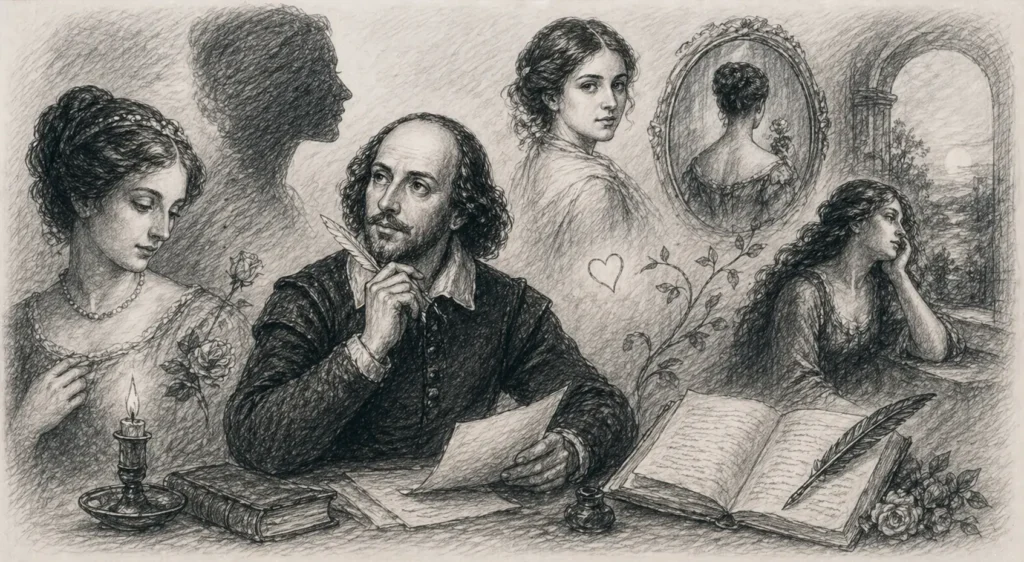
Portrayal of Women in Shakespeare’s Sonnets
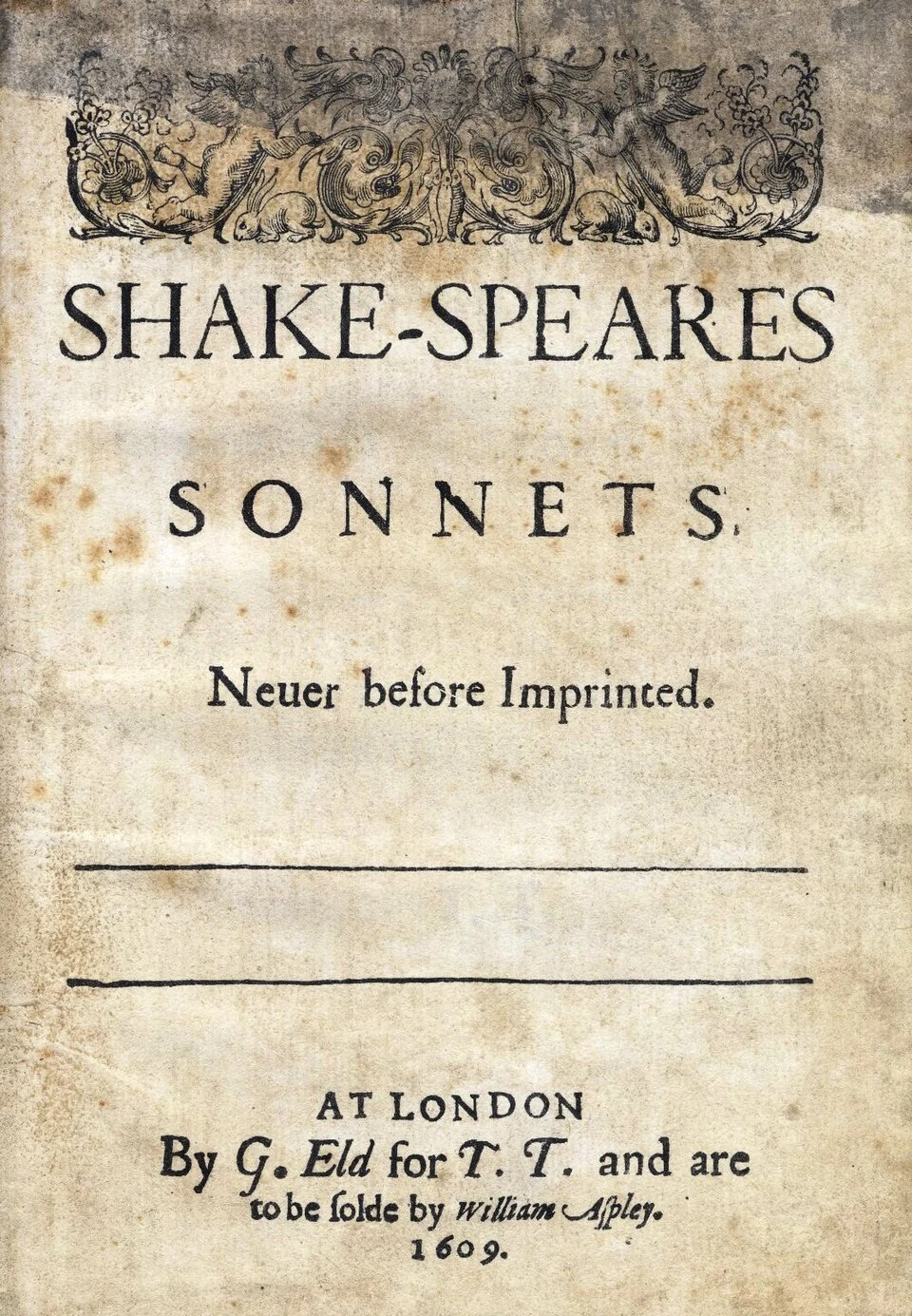
Image taken from Wikipedia.
The term sonnet is derived from the Italian word ‘sonetto’ meaning a song. By the thirteenth century it signified a poem of fourteen lines that follows a strict rhyme scheme and specific structure. The Elizabethan sonnet is broken into four stanzas. Three stanzas are quatrains (contain four lines) and one is a couplet (contains two lines).The rhyme scheme of the Elizabethan sonnet is as follows: abab cdcd efef gg. This means that the first/third and second/fourth lines rhyme. Writers of sonnets called ‘sonneteers’.
Elizabethan sonnets represent the chain of English sonnets that were written in Elizabethan age by eminent sonneteers such as Sir Thomas Wyatt, Earl of Surrey, Philip Sydney, Edmund Spencer and chiefly William Shakespeare.
I personally think that most of the sonneteers tend to exaggerate a lot while portraying women in their sonnets whereas Shakespeare chose to be real and hence here I will discuss how Shakespeare gives an honest opinion on his mistress’ beauties unlike other poets.
The Elizabethan sonnet is also called the English or Shakespearean sonnet. The Elizabethan sonnet tends to contain messages of love (similar to the Petrarchan sonnet). It is composed of two main features: the lover’s loyalty and desperation, and his mistress’ surpassing beauty and coldness. However, Shakespeare’s sonnets deal with clarifying the myth of an ideal woman.
Shakespeare is expressing, though not in the first person, that he knows women are not the perfect beauties they are portrayed to be and that we should love them anyway. He uses two types of descriptions, one of their physical beauty and the other of their characteristics to make fun of all those ‘romantic’ poets trying to portray women as goddess like beauties.
Woman in Shakespeare’s Sonnets
Out of 154 sonnets that Shakespeare wrote, 26 deals with his sexual feelings for a woman, known as the ‘dark lady’. We get little glimpses of her in his sonnet 130 that talks about her hair, the colour of her skin, etc. Mostly, though, this poem is a gentle parody of traditional love poetry. Shakespeare uses this sonnet to poke fun at the kinds of exaggerated comparisons some poets of his day made when talking about their lovers.
He makes fun of clichéd images that were worn out even then, like ‘eyes like the sun,’ and ‘skin as white as snow.’ These kinds of over-the-top compliments appear everywhere in poems written by many other poets of the time. Although no one is sure whether the woman Shakespeare is talking about really existed, readers can see how well he uses this sonnet to spear lame poetic clichés.
One of the physical attributes, in the first quatrain, that he mentions is his “mistress’ eyes are nothing like the sun,” meaning she has no sparkle in her eyes. In the first quatrain, he also speaks of coral as being “far more red” than the lips of his mistress; this is a use of imagery to show her non-beauty. Shakespeare also speaks of her breasts as being “dun,” or brown, instead of white as snow. Being tan was a physical sign that someone has been outside a lot and therefore is working. The last physical attribute to be mentioned is her “black wiry hair.” This is a contrast to most descriptions of women, where they would have blonde silky hair.
On the second critic, “He loves to hear her speak” even though he knows of more pleasing things to listen to. Her voice might not be as good as music but he likes it. He acknowledges “the breathe that from my mistress reeks” is not as sweet as any perfume. He uses the truth of a woman’s beauty and graces that a lot of poets are lying about in their ‘sweet’ poems. He is pointing out that they are visualizing women in extremely un-proportional views.
As Shakespeare wrote, the structure of a sonnet falls into three parts: the problem, the resolution, and the turn. The problem posed by Shakespeare is of two main features: the lover’s constancy and desperation, and his mistress’ surpassing beauty and coldness. The resolution is the first compliment:
“I love to hear her speak”
This emphasises that the speaker isn’t in love with the mistress solely for her beauty or appearance; he is in love with her voice and personality too. He is using the sonnet form to tear down the stereotype. The turn lies in last two lines of the sonnet:
“I think my love as rare
As any she belied with false compare”
These are a statement of validity in his declaration that his love has real beauty, unlike the falsity of the ideal. He informs readers that he loves his mistress not because she is a goddess or otherworldly, for she is human and flawed.
Shakespeare himself wrote of women that were so much more beautiful than they most likely were; this shows his ability to see and write both sides of a situation. His use of imagery allows the reader to verbally ‘see’ this woman, and her plainness. He mentions a beautiful object that is vivid itself, and then says his girl is nothing like the previous.
Conclusion
Katharine M. Wilson quotes “Shakespeare assumes a mocking naivety in which he says his lady has none of the wonderful qualities common to the ladies of other poets and yet he thinks her as good as any woman about whom such lies are invented” (Shakespeare’s Sugared Sonnets, 83). Sonnet 130 is an example of poetry being able to change assumptions of society and of a stereotype and break free of the frame. Petrarch’s ideal of women is pervasive and undermining, leading to an unfair perception of women which continues today.
We are as much victims today of adulating ideals of beauty and appearance at the expense of realism. We are a society which loves the beautiful and vilifies the ugly. We are as guilty today as they were in Elizabethan times of being seduced by the Petrarchan illusion to which Shakespeare gives a parody through his sonnets. I think Shakespeare is very honest to the lady he dedicates the sonnet to, when he says he loves her with all her imperfections and I suppose that is what true love is meant to be.
Stay tuned for next episodes as we decode further Literature tales and stories.
Meanwhile you can read the second episode on ‘Folly in William Shakespeare’s Twelfth Night‘.
WORKS CITED
Books:
Albert, Edward. History of English Literature. India: Oxford UP, 1979. Print.
Daiches, David. A Critical History of English Literature (Volume 1). India: Supernova Publishers, 2010. Print.
Hubler, Edward. The Sense of Shakespeare’s Sonnets. Princeton: Princeton UP, 1952.Print.