

Introduction:
American Drama can foremost be known best for it’s ‘experimentalism’ in dramatic forms, but as Miller states the most evident theme in these works is the influence of the American Dream, the dream of freedom, equality, opportunity and making fortunes. Initially for years, dramatists kept promoting or praising this idea as a notion that shaped the nation, in their works; but the later dramatists chose to highlight the futility and the disillusionment behind the dream, due to the financial crisis, deteriorating economy and growing population with the tool of realism.
“The American Dream is the largely unacknowledged screen in front of which all American writing plays itself…Whoever is writing in the United States is using the American Dream as an ironical pole of his story.”- Arthur Miller(421)
Hence, due to shift in ideas and by the influence of various schools of thought, drama as a genre in America experienced a vast transformation, acting all the while as a social, political and economical mirror of its contemporary America.
The Journey of American Drama:
“Drama travels in the caboose of literature.”—Playwright Robert Sherwood.
The United States of America, the salad bowl of the world, is the land where the early settlers, preoccupied with physical and spiritual survival in an alien land cherished the puritan belief in hard work, frugality and piety. The earliest settlers were the British Puritan colonies whose beliefs and codes of conduct were so rigid, that drama as a medium of entertainment was unacceptable.[1]After a good deal of hesitation, in the 17th century, the early colleges in several colonies permitted theatrical activity.
America was to follow for the next two centuries drama as a political tool. The issues for the early settlers like the arbitrariness and irrationality of British colonial rule and its systems of law and government are highlighted in Robert Munford’s The Candiates of The Humours of a Virginia Election(1770). The drama of American Revolution became an instrument of pamphleteering for either the cause of nationalism or loyalty to the crown as in Mercy Otis Warren’s plays. The early nationalist sentiments were focused next in the dramas.
The surge of literary romanticism across the national and continental barriers in the early 19th century blurs the focus of the nationalist cause in America and the nation joins the continent in responding to the aesthetic values of romanticism. Brutus, or, The Fall of Tarquin(1819) by John Howard Payne, The Gladiator(1831) by Robert Montgomery Bird, fashion out American romantic tragedy with its focus on the sheer romantic impulses of the dramatic character than any other cause while Popular drama grappled with the institution of slavery, that divided the nation, brought about the civil war and forced the redefinition of the nation with works like The Escape; or, A Leap for Freedom(1858)by William Wells Brown.
American drama, in the course of the 19th century, lent itself to two dramatic premises –melodrama[2] and farce[3]. As commonly understood melodrama meant a departure from credibility and working out of a fantasy[4].
Advent of Modernism:
“People don’t go to the North Pole and fall off of icebergs, they go to the office and quarrel with their wives and eat cabbage soup.” –Anton Chekhov.
Every struggle, national, cultural and artistic, in this long process of growth has finally shaped the powerful medium of 20″ century American drama. With the beginning of the 20th century, and the Little Theatre movement[5], there is a shift from the ridiculous to the realistic; with the influence of three of the major European playwrights in particular, who profoundly impacted American Drama, intent on representing life within drama in a more realistic style.
Henrik Ibsen, the father of realism, introduced plays of idea to create social awareness with topics that were considered scandalous at that time. Next being, August Strindberg, known for his psychologically complex characters with a focus on the development of characters over plot, a dark contrast to the farces and melodrama and thirdly, Anton Chekhov, who focuses on internal actions and emotions, the dialogues in his plays were filled with subtexts. All three of them developed the ‘slice of life drama’ technique where the focus is on real life with well developed characters that the audience could relate to.
Modern American Drama:
As the century progressed, the most powerful drama spoke to broad social issues, such as civil rights; individual perspectives in mainstream theatre became far more diverse and more closely reflected the increasingly complex demographics of American society.Realistic portrayals of sensational subjects also flourished in many plays of this era. The American family, and its development and disintegration, was a recurring theme of playwrights at this time, and it would dominate much American playwriting for the rest of the 20th century. A host of American playwrights were intent on experimenting with dramatic style and form while also writing serious socio-political commentary.
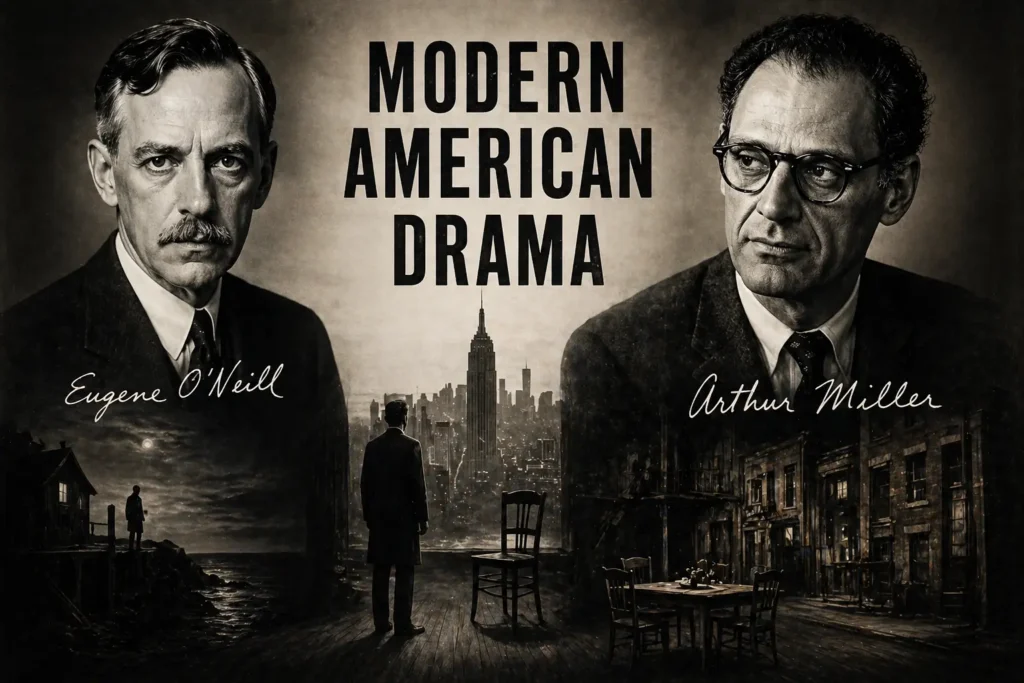
One of the first groups to promote new American drama was the Provincetown Players, Massachusetts and the company’s star was Eugene O’Neill, the most experimental and the first playwright to introduce realism and expressionism in America in 1920. This style of drama has settings, characters, actions and emotions drawn from ordinary lives that the 20th century audience could relate to[6]. Hence, realism became the dominant mode of the American drama.
Realism provides a platform to critique as well as comprehend the ways in which individuals are negotiating within families as well as within society with the larger dreams of the nation outside of their private stage. The socio-political background that gets captured in these plays, almost function as the biography of the social milieu. We get an understanding in the trends, shifts, movements and concerns of the American society as well as all the national, cultural and artistic struggles of the century. The focus thus, is not on the outside glamorous deception but the inner troubled psyche of the individual characters.
As realism took a hold on American Drama, expressionism became another major part of the ‘experimentalism’. Expressionism was a style which the playwrights used to portray the changing society in which they wrote, and the troubles this new emerging society created, allowing the audience to look at it critically.
Many experimental concepts were added to the stage, with lights and sounds, dreams and hallucinations, the nightmares of the irrational troubled side, introduction of gothic tragedy[7] by Tennessee Williams. The darkness of ambiance is in a way representative of the inside, the guilt, doubt and ennui feeding at the soul of the modern man, that too in a society where psychological issues were not wholly recognised, the mood of the drama is serious and intense but not bleak. Most characters within Modern Drama have been given the ambition of a dream that ended in some sort of tragedy or downfall; suggesting the modern dream is an ‘illusion’.
“In doing so, they not only innovated a new dramatic form, but re-defined playwriting from a theatrical craft to a literary art form, heralding the birth of American dramatic modernism.” [8]
Eugene O’Neill:
“Man is born broken. He lives by mending.”[9] – Eugene O Neill
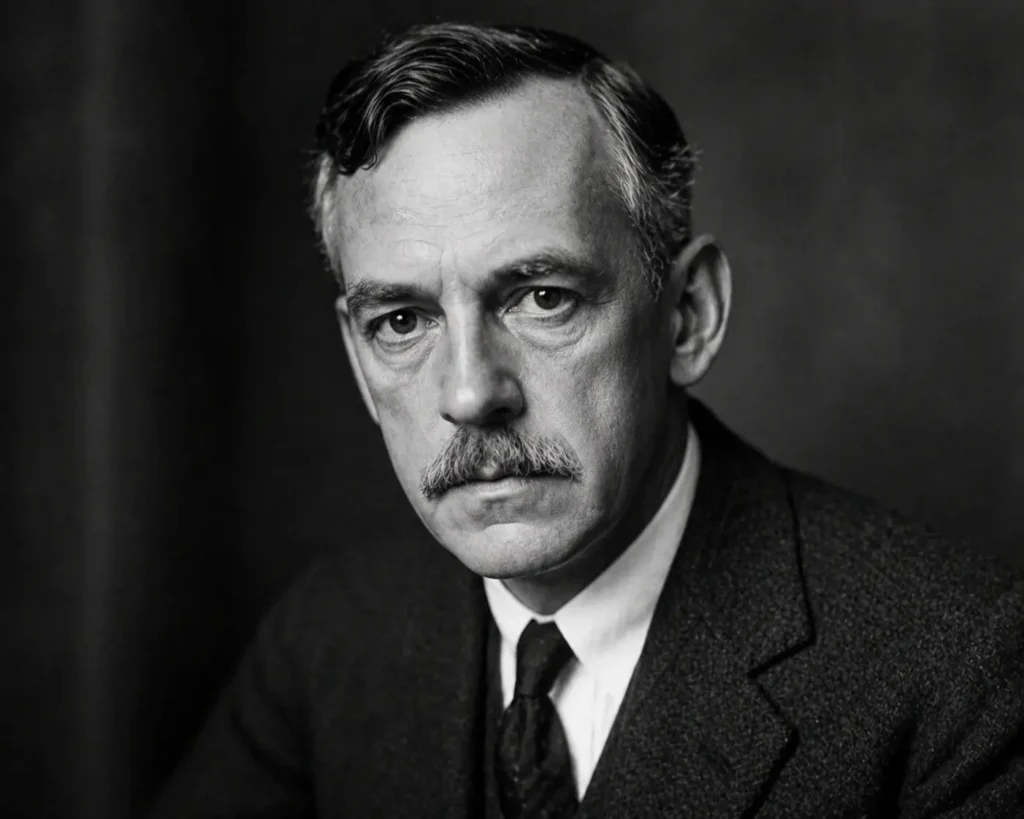
Eugene O’Neill, the father of American modern drama initiated focusing on the themes of realism, with wide range of themes, characters, intensity and seriousness in 1920’s America.He challenged the idea of drama just being a medium of exaggerated unrelatable situations, and began experimenting with one act plays, with characters from all fringes of the society, speaking in vernacular language and common dialect which attracted more and more audiences and thus increasing the popularity of the genre.
O’Neill as a dramatist was more interested in divulging the interior working of the human psyche; the characters have high hopes for themselves that ultimately leads to disillusionment and pessimism. Women were the prima facie of his dramas. The complexity within every woman protagonist constituted the central theme of his story.
He took realism from one acts and applied it to his full length plays, reflections of uneasy modernity and realism emerges as an important theme, in one of his earliest and most significant works, Emperor Jones(1920), a very expressionist play[10] focusing on the complexity of race and individualism in 20th century. The era of the Roaring Twenties[11] was also a glory period for Eugene O’Neill, during this period Eugene O’Neill reached for greatness with vast five-hour plays; Strange Interlude (1928), a nine-act play, explored through its leading female character the way in which hidden psychological processes affect outward actions. It was awarded the Pulitzer Prize for drama in 1928.
His masterpiece, A Long Day’s Journey Into Night(1941), presents to the audience a frame full of all the familiar issues they can relate to, he is one of the first writers to study the deep emotions, conscience and subconscious, inside the head of the characters, and portray them with the use of hysteria, madness, hallucinations, etc, to capture the irrational side on the unexplainable decisions, giving the general image of a family that looks wholesome on the outside but is broken from the inside, the exact representation of modern man’s fragmented disjointed reality.
This too was his award winning posthumous autobiographical drama, which was very close to his heart, dedicated to his third wife Carlotta, as every character was deeply inspired and driven by his own family. The characters spoke his feelings and dialogues were nothing but the depiction of discordance within his own psyche.
In an interview published in 1922, O’Neill asserted, “Our emotions are a better guide than our thoughts, our emotions are instinctive. They are the result not only of our individual experiences, but of the experiences of the whole human race, through the ages, they are deep undercurrent, whereas our thoughts are often only the small individual surface reactions. Truth usually goes deep. So it reaches you through your emotion”. (Qtd. Carpenter 175). Thus, O’Neill, by delving deeper into the psychological issues of the then society, not only significantly contributed in the field of modern literature, but also paved a path for many others to follow.
Arthur Miller:
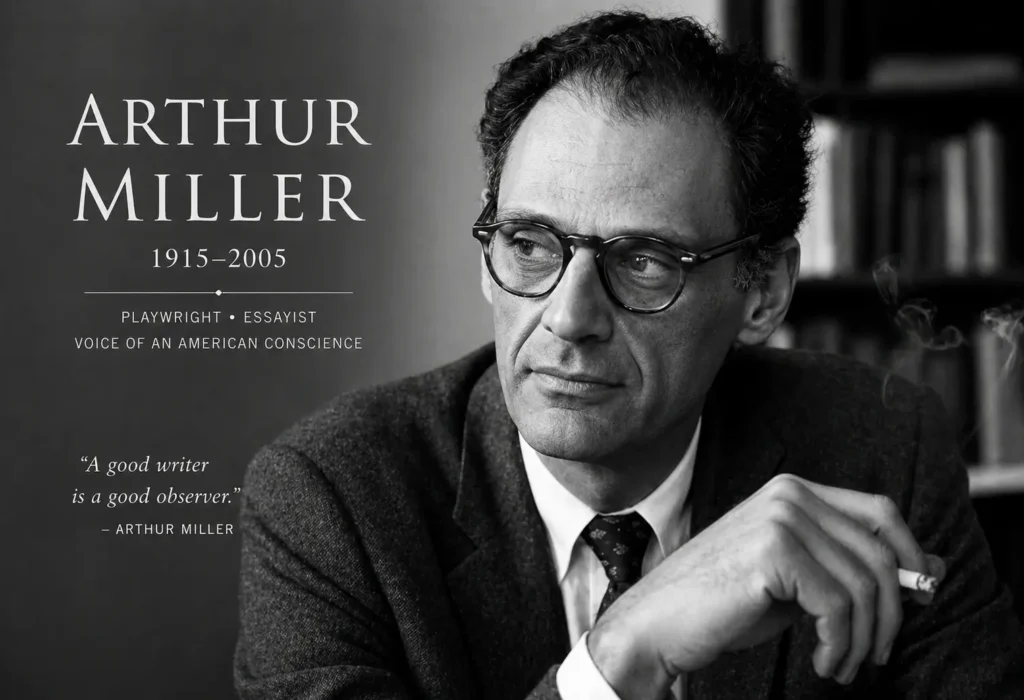
“Sometimes …it’s better for a man just to walk away. But if you can’t walk away? I guess that’s when it’s tough.”-Arthur Miller.
Arthur Miller and Tennessee Williams dominated the post-World War II theatre until the 1960s. Miller’s intense family dramas were inspired by the problem dramas of Henrik Ibsen and the works of the socially conscious ethnic dramatists of the 1930s, especially Clifford Odets, but Miller gave them a metaphysical turn. His works had rational forces similar to Ibsen’s plays, everyday life burden of a failed man with a corrupt version of the American dream in his head. Concept of alienated individual, pathos, grief and defeatist elements surrounds his plays. Setting is the backdrop against which the plot unfolds, materialism, selfish pursuit of pleasure, desire to obtain wealth and power surpasses moral and noble vales.
Miller’s iconic plays, Death of a Salesman(1949) and All My Sons(1946) both critique the American dream getting foregrounded during the post World War2 period, highlighting the crisis of an individual as well as the crisis the nation is facing in their dialogues. His works were at their strongest when he dealt with father-son relationships, anchored in the harsh realities of the Great Depression. In both these plays we see initially that the crisis of the individual which eventually with the psychological turmoil begins to be mapped against the bigger socio-cultural and political and historical background.
Miller also proved to be an effective protest writer after writing ‘The Crucibles’(1950), which is about the Salem Witch Trials, but with a commentary attacking the witch hunting of the McCarthy era and the Red Scare, when everyone was afraid their neighbour was a communist.
Miller’s stage directions describe an expressionist set – a ‘shell-like’ and transparent family home with no walls, giving the impression of a dream-like narrative. Miller also keeps intact the realistic feel of the play by employing naturalistic props like the refrigerator, dining table, etc, as a more naturalistic set allows for less distraction from the action and the audience is able to follow the story and become more involved rather than distracted.
Also, the dramatic language of realism was meant to be close to everyday speech, allowing the audience to familiarize and connect with the situation of the play. Miller too with his extraordinary intense insight into human behaviours and artistic talent for experimenting, contributed abundantly to the modern drama, and was awarded with various prizes including the Pulitzer Prize for Drama.
Conclusion:
After being inspired by them, following the footsteps of these playwrights, many other modern writers like Ntozake Shange and Lorraine Hansbery, adopted realism and modernism in their works.
Gradually American drama shifted from more realistic to more experimental production, by the end of the century. Twenty first century American Drama has the trends of theatricalism and the theatre of absurd, basically a revolt against the constriction of realism, with an emphasis on stage effects and imaginative settings. In America it was called theatre of the Absurd; here focus is on the revelation of characters’ inner consciousness without references to logical sequence to surface actions.
Twentieth century American drama reflected the larger issues of the era as well as the minor level household issues when realism movement gained popularity. Focus on society and lives of ordinary people provide in-depth exploration of their inner lives, thus being widely accepted and appreciated by the audience.
“Any idiot can face a crisis; it’s this day-to-day living that wears you out.” –Anton Chakhov
Stay tuned for next episodes as we decode further Literature tales and stories.
Meanwhile you can read the first episode of Shakespeare Simplified & Storified on ‘The Witches in William Shakespeare’s Macbeth‘.
[1] So much so, the production of a play called Ye Bare and Ye Cubb in 1665, possibly the first theatrical performance in America, resulted in the trial of the actors. In fact, many colonies in America enacted laws prohibiting theatrical activity.
[2] Melodrama is a genre with sensational plot that appeals to the emotions of the audience, with over the top stereotypical characters, where the plot is more important than character development.
[3] Farce is a comedy with exaggerated situations and to make the audience laugh is its the only goal.
[4] No significant drama pieces were produced during the era, because drama at that time was a social act, attending a play is a public act; and attending a play with a theme that the society questions would somehow imply that one accepts the content in some way or support it, in a time when social morals were strict and consequences were severe, it would have been a great social risk, hence plays were melodramatic, comic with no real social commentary.
[5] Smaller one act plays were widely produced by small theatres mainly like Provincetown Players and Washington Square Players that had no goal for money as they were established against the commercial theatres.
[6] 20th century was a rocky one for America, World War1, forced humanity to face bloodshed to another level, the Great Depression shook the social structure of the entire country in 1929, World War 2 illustrated humanity’s possibility for evil while the Vietnam War made Americans question their role as a world leader, thus drama filled with emotions were more relatable.
[7] A genre that did not exist before, with the elements of horror, grotesque, and eeriness. (with an exception to Shakespeare’s works like Macbeth and Hamlet, he was a mastermind who was way ahead of his time.)
[8] Julie A.Walker in Expressionism and Modernism in the American Theatre.
[9] The Great God Brown by Eugene O’Neill, he had great admiration for the Ancient Greek Tragedy, the use of ancient myths was exquisitely sculpted in his dramas, with a deeper insight into the characters’ psyche.
[10] The technical devices of expressionism, lightning, setting and sound are used to project the Emperor’s vision, to reveal his state of mind, through the use of lightning, going from the blazing sunlight of the first scene, where the hero’s mind is clear, to the moonlight “merged into a veil of bluish mist” in the seventh scene, where fear undermines his sanity. Just as in one scene of Long Days Journey into Night, O’Neill achieves the same effect of weather to show Mary’s mind, as the fog becomes thicker with her drug using more violent and as a consequence so does her haziness.
[11] The 1920s was the most prolific decade for professionally produced plays on the New York City stage.
Books Cited:
- Bigsby, C.W.E. Modern American Drama 1945-2000. Cambridge, 2000. E-text.
- Miller, Athur. Death of a Salesman. Bloomsbury, 2018. Print.
- Quinn, Arthur Hobson. The English Journal.1923. e-text.